When a tree starts to become a worry for your home or family, tree removal can feel like the obvious answer. But tree removal often isn't the only option, or the best one. Many trees can be preserved for years to come with proper care and maintenance, giving you peace of mind and saving your budget. Tree cabling is one of the most effective ways we do that.
Recently, one of our long-term clients called us out to look at a large three-stem poplar in her backyard. She was worried about growth at the base of the tree, the weight of the spreading canopy above it, and a lean that appeared to be getting worse. Removal was on the table, but after a closer look, preserving her tree through cabling turned out to be the better option.
We Diagnose Before We Decide
Good tree care starts with knowing what's actually going on inside (and underneath) the tree, not just guessing from the outside. Before recommending anything, we ran two tests:
This is the quiet, careful side of tree work, and it told us what the eye couldn't: the tree was healthier than it looked and worth preserving.
What Tree Cabling Does for Your Safety
Cabling connects a tree's stems, usually about 75% of the way up, to reduce how much they move in the wind. Less movement means less chance of tearout, where one stem splits away from the others and can cause damage.
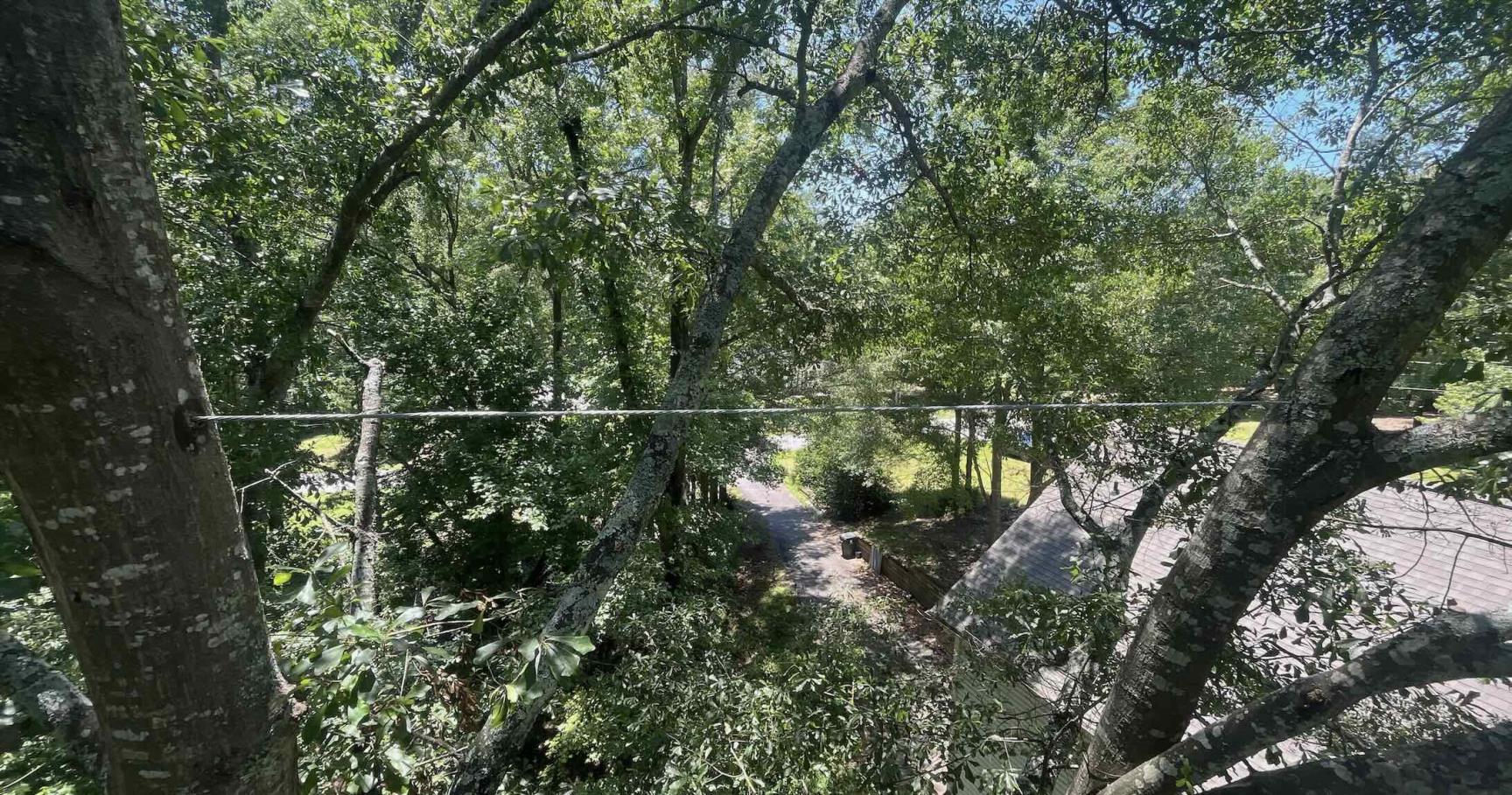
Tearout risk is the highest on multi-stem trees, what arborists call bifurcated, trifurcated, or codominant trees, meaning two or three or more trunks from the same base. As those stems mature, they push apart, and the odds of a split soar. In our area, poplars are especially prone to it because they hollow out inside as they age. On a large tree like a poplar, a tearout isn't just a lost limb. A limb can land on a house, a car, or a person. Cabling is how we reduce that risk while preserving your tree.
Cabling Done Right
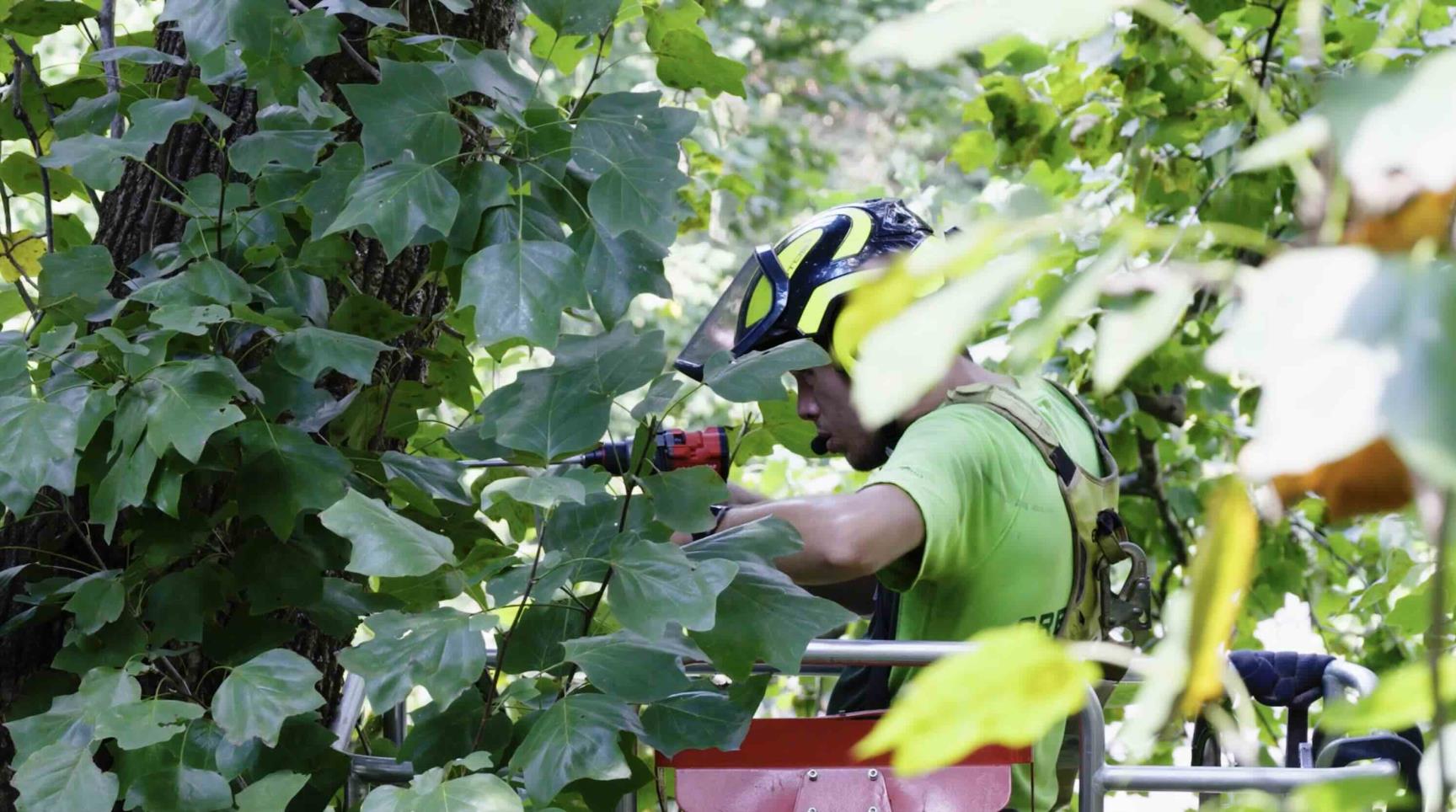
Here's the part most companies won't tell you: cabling is often done wrong. A cable that’s set in the wrong place or with the wrong pattern is essentially a placebo (it looks like protection, but your cable isn’t doing anything to hold back the potential risk). And if a tree has serious defects at its base (the bottom of the trunk), no cable up top will fix that. Done correctly, cabling can preserve your tree for years and genuinely provide meaningful structural support and peace of mind.
Affordable Protection for a Tree Worth Keeping
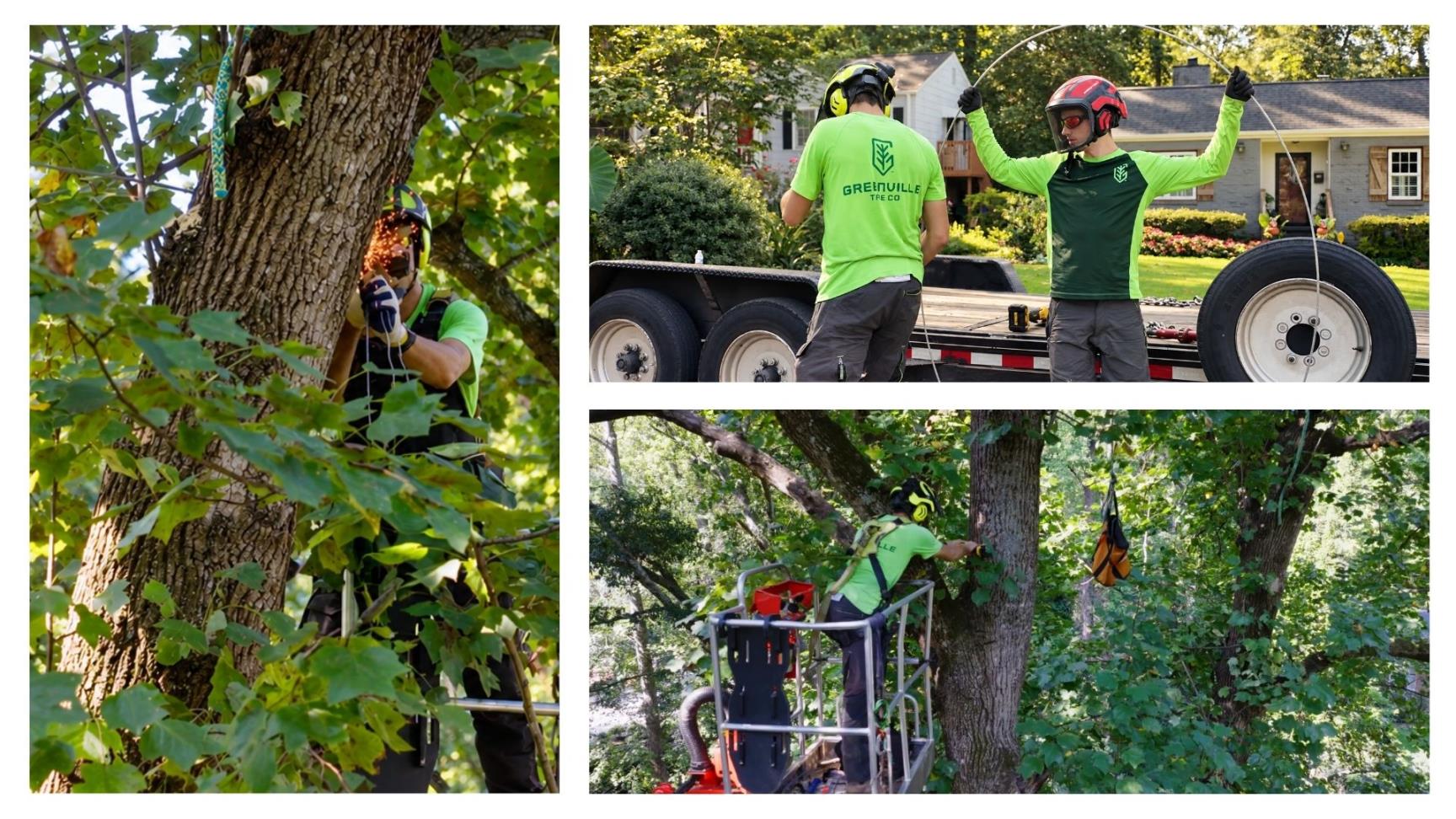
Tree preservation is part of our mission, but it’s also usually the cheaper path for our clients. Our cabling jobs always include both the labor and the hardware and typically take only an hour or two, so cabling costs a fraction of what it takes to remove a large tree and clear it away. Often we'll pair cabling with a little extra maintenance, like removing dead limbs or light pruning, while we're already set up in your tree. You keep the shade, the wildlife, and the character of a mature tree, and you will spend far less doing it.
Good Decisions Come From Good Choices
In the story above, we presented our client with both options: removal and cabling. We believe that our job is to give you the information to make the best decision for your tree, not to talk you into the job you don’t need. Wherever possible, we believe in preservation over removal, because caring for the trees we already have is one of the best things we can do for Greenville and the surrounding Upstate.
If you have a tree you're worried about, especially a multi-stem tree with a lean or growth at the base, don't assume removal is the only path. Call us for a free consultation, and we'll come out to help you figure out whether it can be saved or if removal is the best option for you.