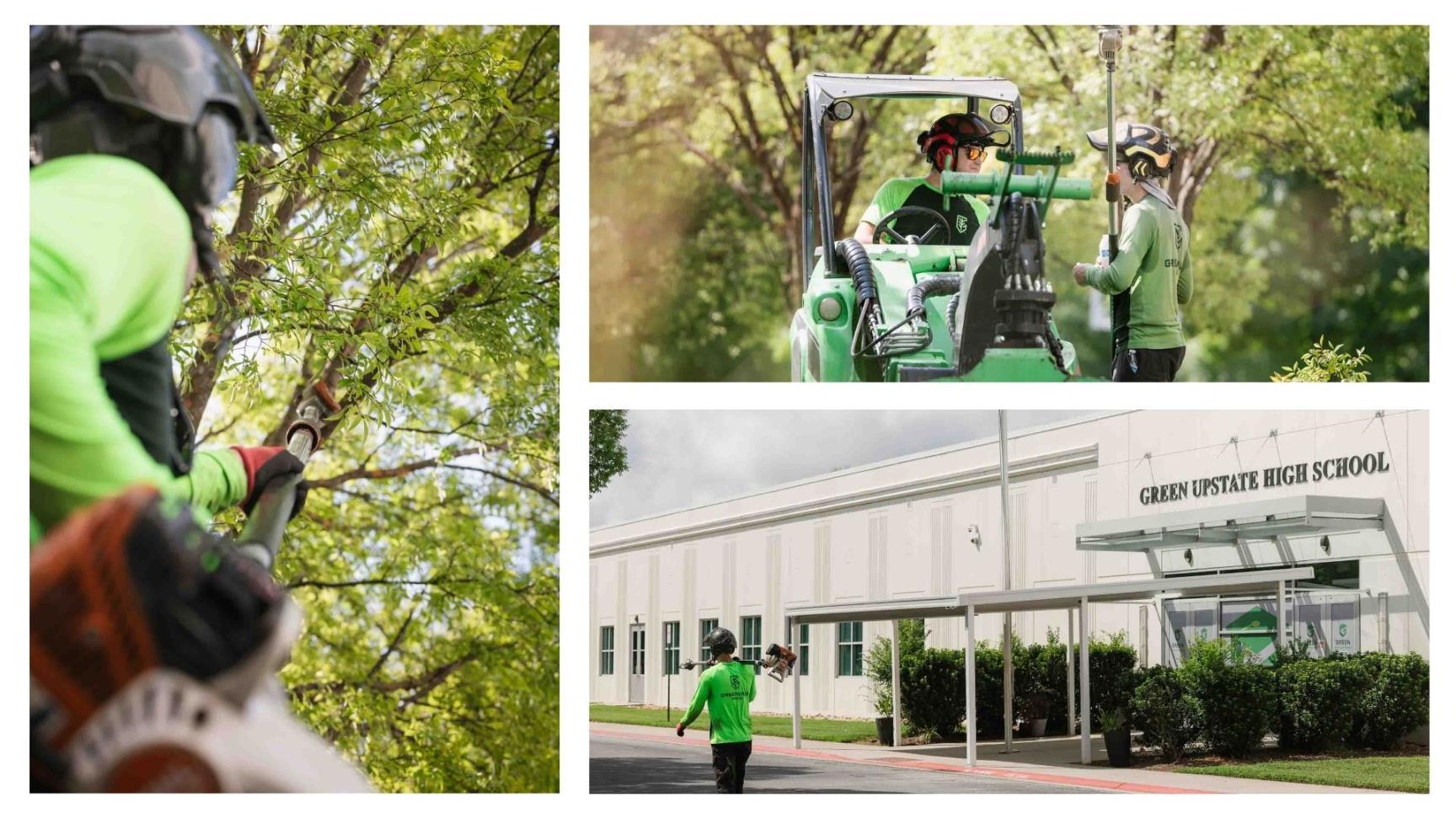
As a property manager, the trees on your site are easy to overlook until a limb drops on a car or an overgrown canopy swallows your signage. But the trees around your business are part of the first impression customers and clients form before they ever walk in the door, and keeping them healthy protects your property, your tenants, and your bottom line.
At Greenville Tree Co, our mission is to give you a worry-free tree-care experience that's just done right. Professional commercial tree care covers everything from routine pruning to full removal, and knowing the right approach for each tree takes experience. Here's what every property manager should know before the next issue comes up.
1. Pruning Is More Than "Trimming"
Good commercial pruning isn't one-size-fits-all. Depending on the tree and its needs, pruning typically falls into three categories:
- Aesthetic pruning: shaping the tree to look clean and intentional.
- Structural (clearance) pruning: raising the canopy so branches don't hit vehicles or buildings, or block walkways.
- Health pruning: removing dead wood and weak limbs before they fail.
Pruning also isn't a one-and-done job. Depending on the type, most commercial trees need attention every one to four years, so it's worth building into your maintenance plan rather than waiting for a problem to force the issue.
2. Well-Kept Trees Bring in Business
Customers judge your property the moment they drive into your parking area. Overgrown canopies, dead branches, and trees blocking your signage can all send the wrong message, but there’s a more direct cost, too: a tree blocking your sign can hide it from view. You can have a large, well-lit sign, but if customers can’t see it, it isn’t doing its job. Pruning the canopy away from your signage restores visibility and helps ensure your business gets noticed. Thoughtful tree care keeps your property looking polished, professional, and inviting.
3. Removal When a Tree Is Past Saving
Not every tree can be pruned back to health. When a tree becomes diseased, damaged, or hazardous, removal is the safer call. A dead limb over a walkway or a leaning tree near a parking lot is a claim waiting to happen. God willing it never does, but if it falls on a person, a car, or a neighboring building, you're the one holding the risk. Catching the signs of a sick or unstable tree early lets you handle it on your schedule. And when a tree comes down unexpectedly, our emergency team responds to requests within four hours during business hours to get your property back to business.
It’s not always what’s above ground either. Tree roots can lift sidewalks and threaten foundations, and on commercial sites we’ve seen them reach septic and sewer lines (which can turn into an emergency fast. We’ve handled rush jobs removing trees and grinding out the stumps and roots that had infiltrated a sewer line so the property could make repairs. Catching root issues early keeps them from becoming a costly disruption.
4. What To Verify Before You Hire
On a commercial property, the crew you hire matters as much as the work. Before signing with anyone, confirm two things:
- Insurance: make sure they carry both workers' compensation and solid general liability. We carry $1,000,000 in workers' compensation and $2,000,000 in general liability, so the risk never lands on you.
- Proper pruning standards: proper cuts matter. A crew that follows ANSI A300 tree care standards won't leave you with stubs or improper pruning that damages the tree in the long term. (Here's more on why the "tree guy" shortcut can cost you.)
5. Commercial Work Takes Commercial Experience
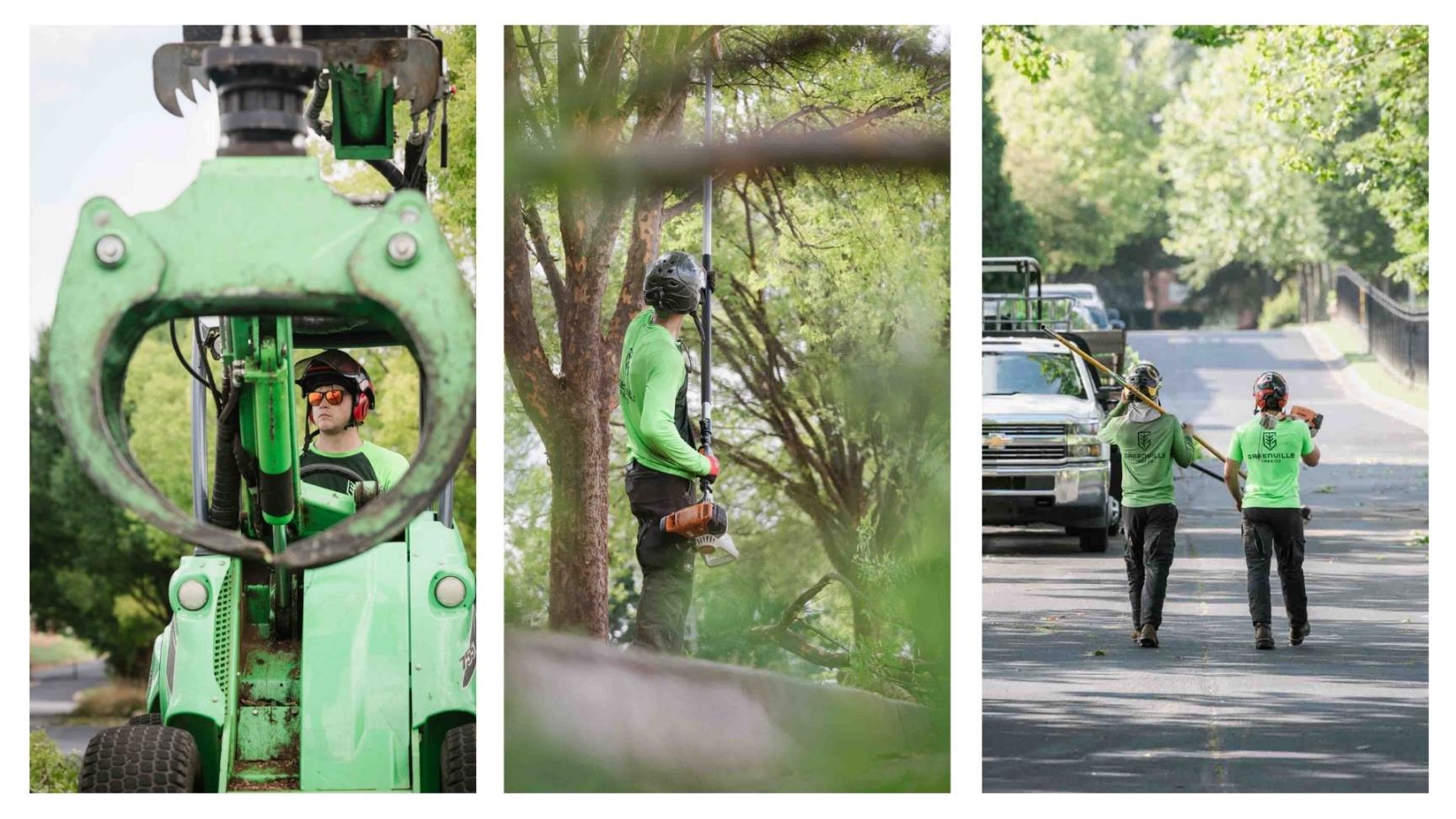
Pruning or removing a large tree in a tight parking lot, near power lines, or beside an occupied building is a technical job, not a task for anyone with a chainsaw and a truck. After working on hundreds of jobs across the Upstate and beyond, our crews know how to protect surrounding structures and use the right equipment, from cranes to spider lifts, to get it done safely. And we don't consider the job done until your property is cleaner than we found it, from chipper operation to final raking, an uncommon practice in our industry. Larger removals inside the City of Greenville may also require extra steps under local ordinances. We handle that too, and you can read the basics in our guide to the Greenville Heritage Tree Ordinance.
Start With A Free Walkthrough
Your trees are part of your property's value, safety, and first impression. Whether they need a routine prune or a full removal, keeping them cared for protects everything you've built.
If you manage a commercial property in Greenville or the surrounding Upstate, request your free estimate today and see the Greenville Tree Co difference for yourself.